

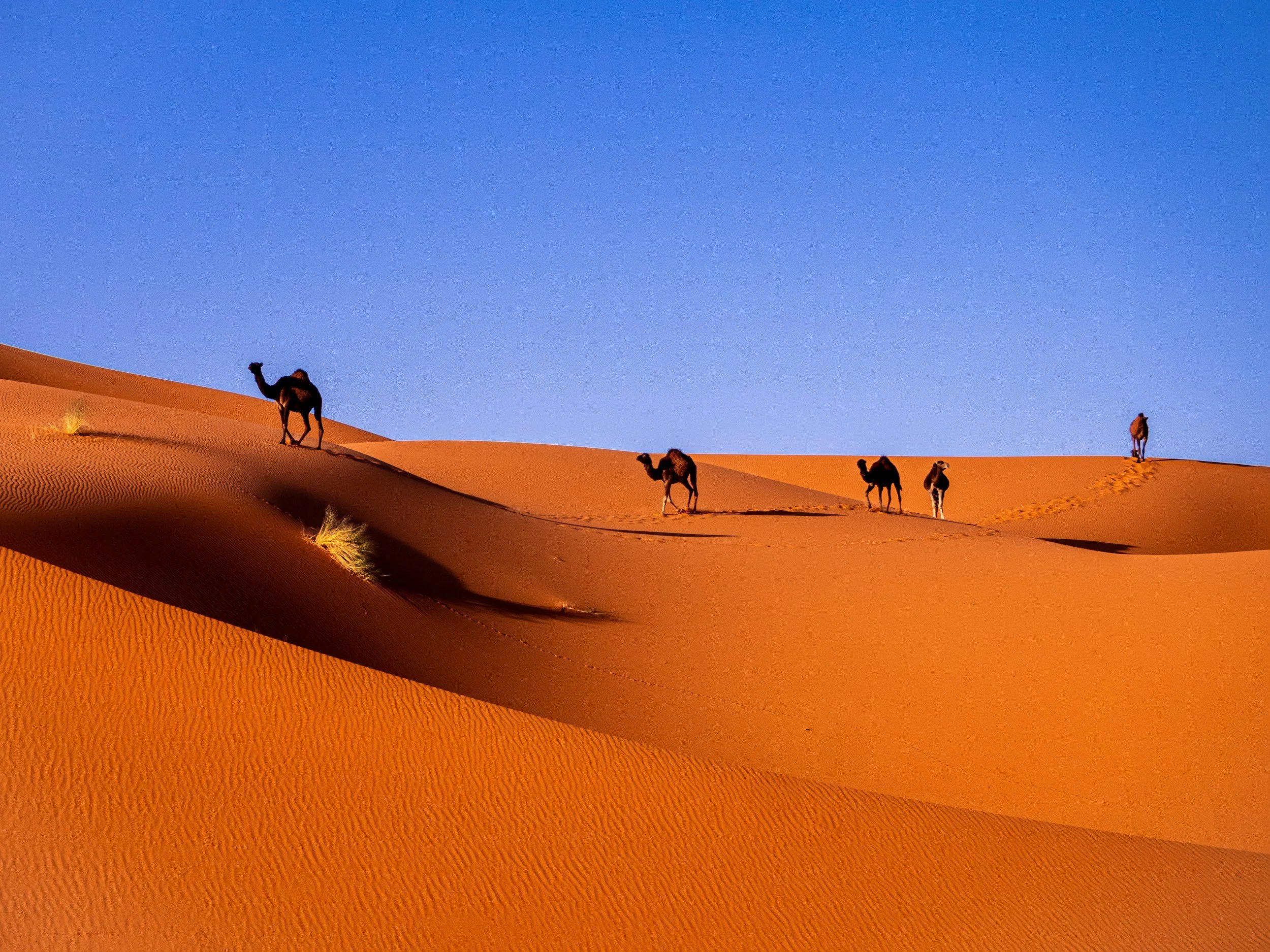
Mauritania
Empty horizons, ocean-wide dunes, caravan trails, and desert culture shaped by wind and silence.
Mauritania is a land built on scale: sand seas that move like tides, plateaus that fall into canyons, and ancient caravan routes threading through palm oases. The Sahara is not a backdrop here—it's the entire stage—shifting from russet cliffs to white dunes that roll uninterrupted to the horizon. Along the Adrar, stone ksour rise from the rock, libraries hide manuscripts saved from centuries of desert storms, and the night sky arrives with a clarity that stops time.
Travel is movement through epic spaces: long dune lines, empty hamadas, dry riverbeds, desert gardens, and gueltas where life gathers. It’s a region where pace slows and sensory richness expands—light, silence, textures, wind, fire, and stars. The beauty of Mauritania lies in immersion, not spectacle: step-by-step, curve-by-curve, the Sahara reveals itself.
Trips in Mauritania
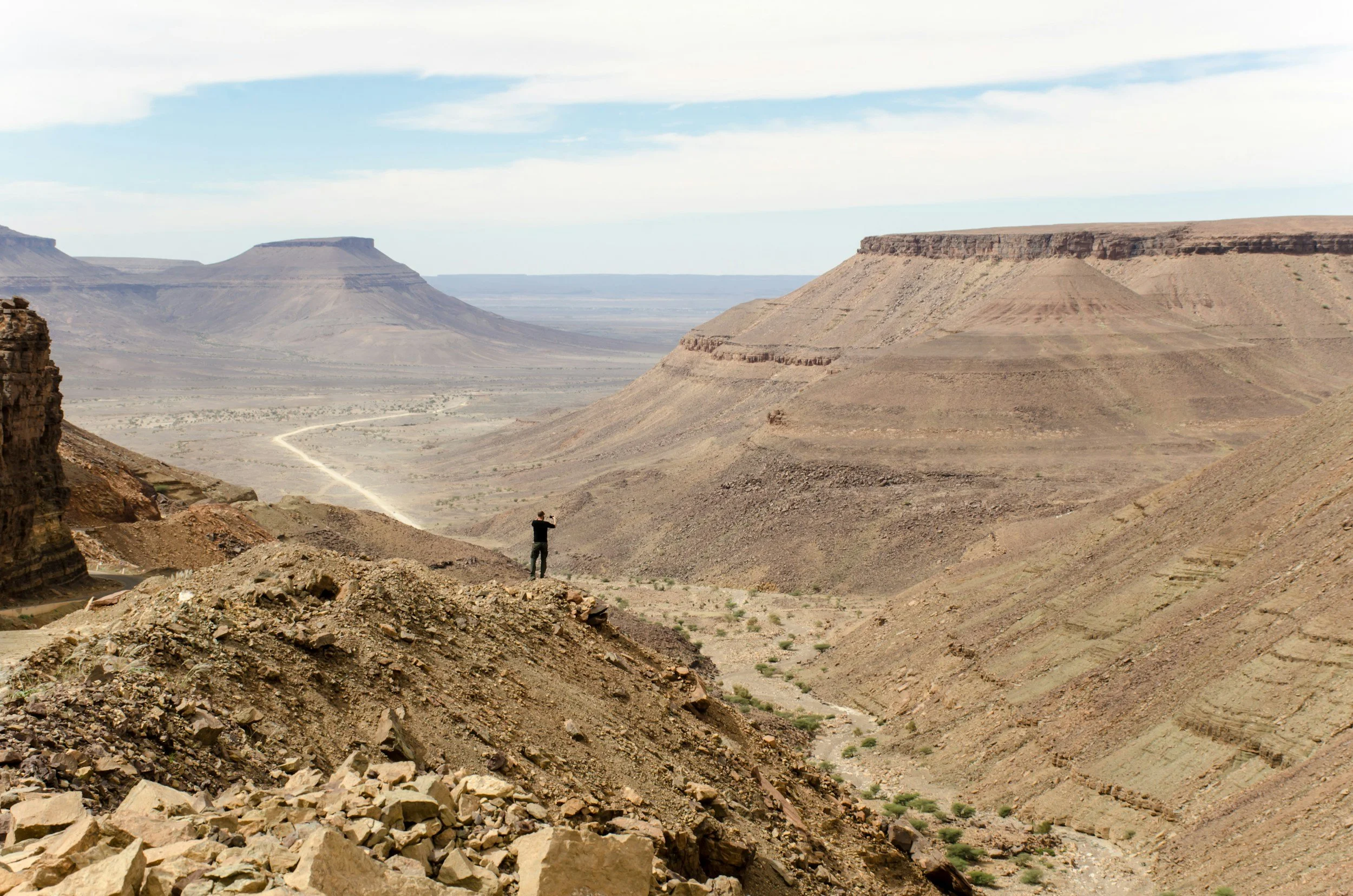
Classic Journey — Mauritania
Desert plateaus, palm valleys, nomadic culture, and gentle dune corridors.
Launching Spring 2026
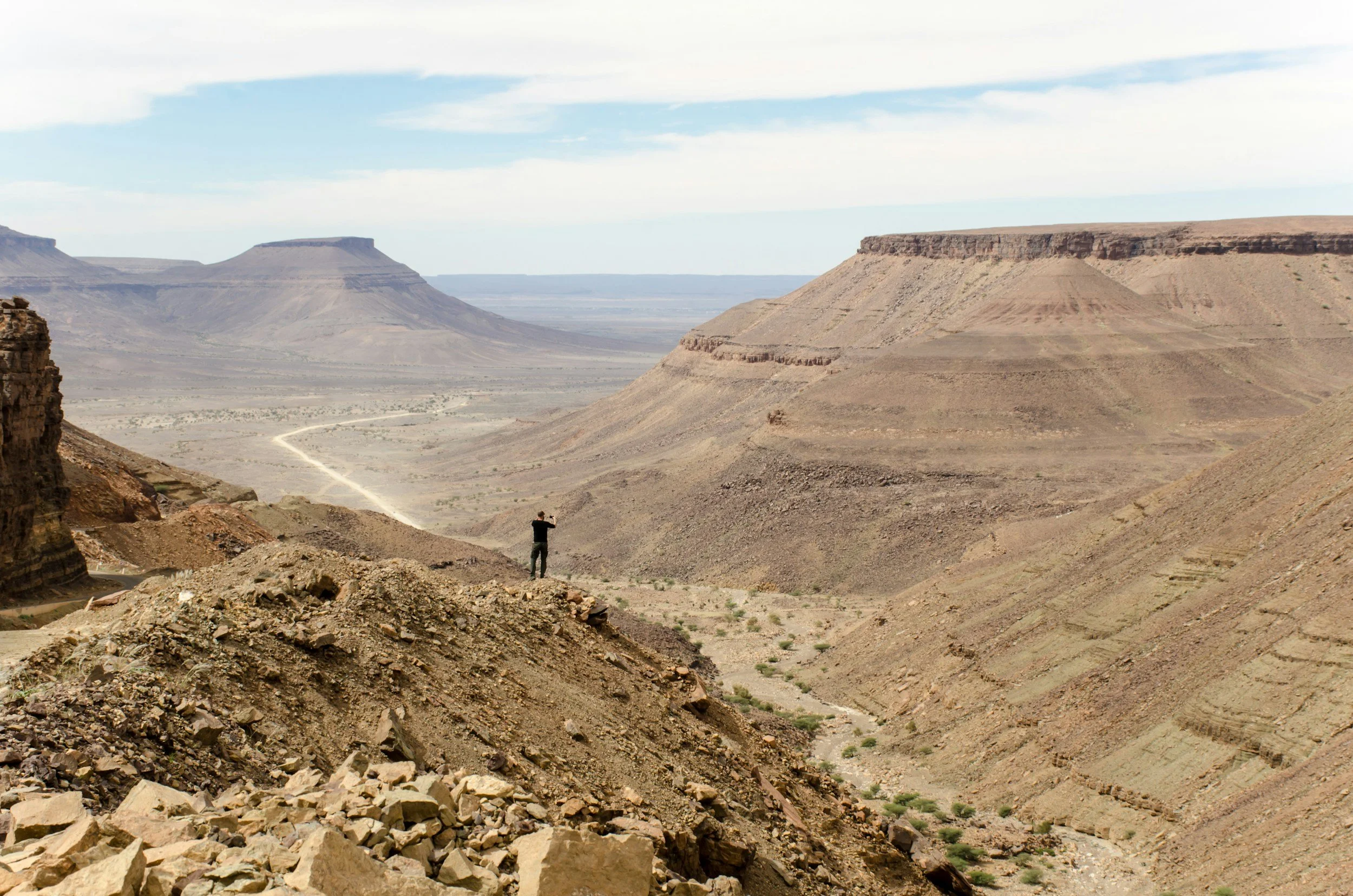
In-Depth Escape — Mauritania
Extend your journey into deeper dune massifs, remote oases, nomadic traditions, and nights under vast Saharan skies.
Launching Spring 2026
FAQ
-
Depending on your itinerary, most travelers arrive through Nouakchott, with direct onward transfers into the desert regions. Your Trip Doc will explain all arrival logistics, meeting points, and timing once your dates are confirmed.
-
The ideal season is October to March, when temperatures stay pleasant for daytime travel and cool to cold at night. Extremes can occur even in a single day. Your Trip Doc will describe what to expect for your chosen dates.
Days range from warm to hot, nights from cool to cold depending on the season. Desert climates shift quickly—strong sun, dry air, evening chills, and occasional winds.
Pack breathable layers, sun protection, warm evening clothing, and sturdy footwear suited for sand and mixed terrain. Once your dates are confirmed, your Trip Doc will outline expected conditions and packing recommendations.
-
Expect a true Sahara mix: wide hamadas, carved plateaus, palm valleys, sculpted dunes, and canyon systems. Trails are moderate but sandy, and the landscape’s scale creates a sense of deep immersion.
Mauritania blends rocky Adrar plateaus, oases and gueltas, dune massifs such as Erg Amatlich, and soft desert routes suitable for accessible hiking and cultural exploration. The focus is on immersion, movement through iconic landscapes, and authentic encounters with nomadic traditions.
-
We always try to minimise transfers, though distances between regions can be significant. Movement may involve 4x4 segments or occasional short camel-supported stretches, such is the land. One or two longer transfers may occur at the start or end of the trip; the rest are designed to remain comfortable and purposeful.
That said, travel here is part of the experience: comfortable vehicles, incredible mountain and desert views, and well-planned breaks make the journeys enjoyable. We structure each day so that transfers are balanced with exploration, keeping the rhythm smooth and maximizing both comfort and discovery.
Think of it as traveling in a moving caravan — covering distance with purpose, while taking in the shifting terrain along the way.
-
Yes. Every journey can be shaped to your preferences. Most guests begin with one of our curated itineraries — you choose the activity level, pace, and travel style, and we tailor the flow and highlights around your group.
If you prefer a fully custom-built trip (unique routing, structure, length, or combinations), this is possible through a separate design process and pricing structure. We will clarify all options before moving forward to ensure the trip matches your vision.
Either way, we work closely with you to create an experience that reflects exactly what you’re looking for.
-
The local currency is the Mauritanian ouguiya (MRU). ATMs exist in major cities but are scarce in remote desert areas. USD and EUR can be exchanged, though roadside rates may be approximate. Carrying some cash for small, local purchases is useful; your Trip Doc will recommend amounts.
-
We operate exclusively in tourism-approved, stable areas within the country, supported by local partners who continuously monitor desert conditions. Mauritania’s desert tourism circuit has a strong record of safety, with established routes, vetted logistics, and coordinated support from regional authorities.
All permits, safety procedures, hydration logistics, and desert navigation are handled by our team. Your Trip Doc will brief you on practical guidelines and expectations.
-
Arabic and French are the main languages, with limited English outside tourism hubs. In remote areas, communication relies more on warmth than vocabulary. Your hosts will share simple phrases that make interactions natural and appreciated.